The History of Traditional Chinese Medicine
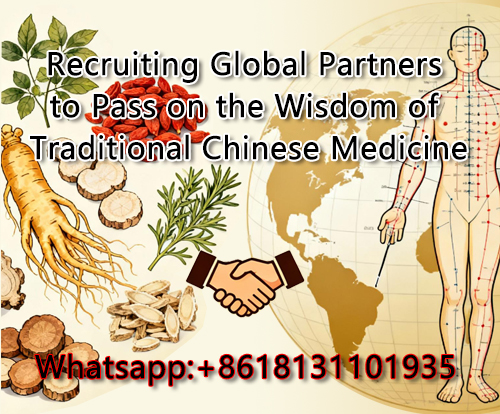
As a treasure of traditional Chinese culture, the origins of Traditional Chinese Medicine (TCM) can be traced back to ancient times. In their struggle against nature and disease, our ancestors accumulated primitive experiences in using herbal remedies and acupuncture to dispel cold. Legends such as Fuxi creating the nine needles and Shennong tasting hundreds of herbs are reflections of early TCM practices.
During the Spring and Autumn and Warring States periods, the Yellow Emperor's Inner Canon was compiled, laying the theoretical foundation for TCM's "holistic concept" and "treatment based on syndrome differentiation." This marked TCM's evolution from an experiential medicine to a systematic medical discipline.
Since then, TCM has continuously developed through millennia of accumulated knowledge. In the Eastern Han Dynasty, Zhang Zhongjing authored the Treatise on Cold Damage and Miscellaneous Diseases, establishing the system of syndrome differentiation and treatment. He is revered as the "Sage of Medicine." In the Ming Dynasty, Li Shizhen compiled the Compendium of Materia Medica, systematically organizing the properties of over a thousand medicinal materials and infusing new vitality into Chinese herbal medicine.
In modern and contemporary times, TCM has not remained stagnant but has instead complemented and integrated with modern medicine. It has demonstrated unique value in areas such as chronic disease management and auxiliary treatment of complex illnesses.
The core principles of TCM lie in the concepts of "harmony between humans and nature" and "treatment based on syndrome differentiation." TCM views the human body as an organic whole, where humans and nature, as well as internal organs and meridians, are interconnected. The essence of disease is seen as an imbalance of yin and yang or stagnation of qi and blood. Treatment is not merely symptom-focused but involves a precise diagnosis through the four diagnostic methods—inspection, auscultation and olfaction, inquiry, and palpation—to accurately determine the syndrome type. Therapies such as herbal medicine, acupuncture, and massage are then employed to harmonize yin and yang, unblock meridians, strengthen the body's resistance, and eliminate pathogens, thereby restoring the body to a balanced state.
The advantage of TCM lies in addressing both the symptoms and the root causes. It not only alleviates surface symptoms but also regulates the functions of internal organs, fundamentally improving physical constitution and reducing disease recurrence. Moreover, TCM emphasizes individualized treatment, tailoring specific plans according to different individuals and constitutions. With its mild side effects, TCM is particularly suitable for managing chronic diseases and suboptimal health conditions, offering a gentle and sustainable health solution for modern people. To this day, it continues to thrive with vibrant vitality.
Traditional Chinese Medicine
Traditional Chinese Medicine (TCM) is a medical system guided by traditional theories such as yin-yang, five elements, zang-fu organs, and meridians. It employs various methods including herbal medicine and acupuncture to prevent and treat diseases as well as promote health. With a long history, it offers unique approaches to treating various illnesses.